
How often to book a heat pump service, what it covers, and how to keep the unit working well between visits.
Blog
How often should a heat pump be serviced?
AGG Kent Limited
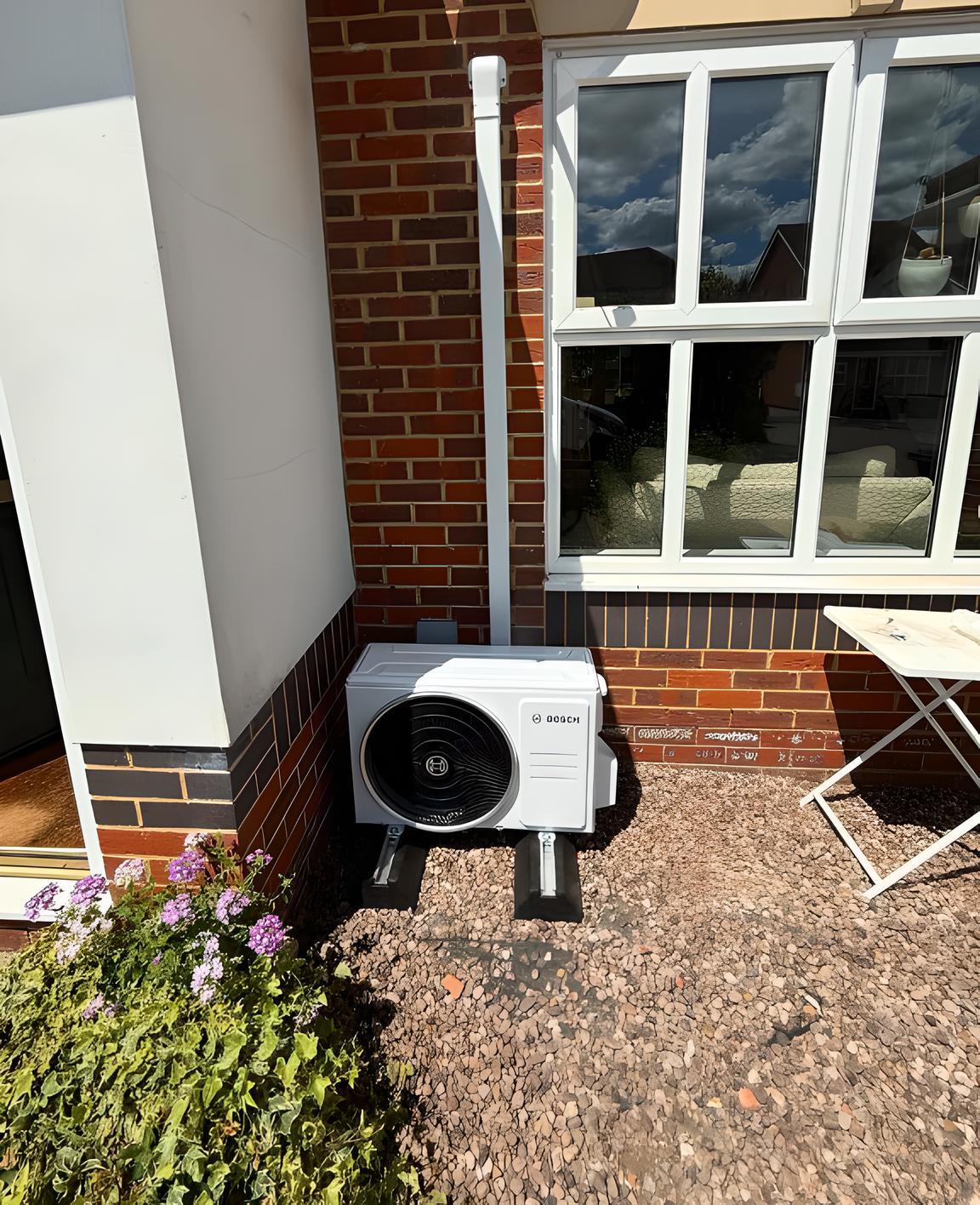
Most air source heat pumps should be serviced once a year by a qualified engineer. That's what nearly every manufacturer asks for to keep the warranty valid, and it's enough for most homes and smaller buildings. Larger commercial systems, units near the sea and heat pumps that run hard all year can need checking more often, and some commercial systems need refrigerant leak checks by law.
This post explains why a yearly service matters, what an engineer checks, when you may need more frequent visits, and the simple checks you or your site team can make in between. Never open the outdoor unit's casing yourself: it holds electrical parts and refrigerant, which only an F-Gas certified engineer should work on.
Why a heat pump needs servicing
A heat pump has fewer parts that burn or wear than a gas boiler, so it's easy to assume it needs no attention. But it moves a lot of air through its outdoor coil, pumps water round your heating system and relies on a sealed refrigerant circuit to move heat. Small problems in any of these quietly cut its efficiency.
A heat pump running below its best still keeps the building warm, so the first sign is often a higher electricity bill rather than a breakdown. A yearly service catches those problems early, and keeps the running costs close to what the system was designed for.
What a service covers
A good heat pump service usually includes:
The outdoor coil and fan: cleaning leaves, dirt and debris from the fins (the thin metal plates air passes through) and checking the fan turns freely.
The refrigerant circuit: checking pressures and temperatures, and looking for signs of a leak. Only an F-Gas certified engineer can do this.
The water side: checking the system pressure, cleaning the strainer or magnetic filter that catches debris, and testing the inhibitor, a chemical that protects the pipes and heat exchanger from corrosion.
Electrics and controls: checking connections, safety devices and settings, and updating the controller's software where the manufacturer recommends it.
Defrost and drainage: making sure the defrost cycle works and meltwater can drain away. Our post on why heat pumps ice up in cold weather explains why this matters in winter.
Hot water cylinder: where there is one, checking its safety valves and the immersion or legionella cycle that periodically heats the water higher.
The engineer should also check the system's performance against its design, and leave you a written record of what was done.
Warranties and the law
Most heat pump makers offer long warranties, but usually only if the unit is serviced every year by a qualified installer and the record is kept. Missing a service can void the warranty, which matters on an expensive part such as the compressor.
On larger systems, the law also sets how often the refrigerant circuit must be checked for leaks. Under the GB F-Gas regulations, systems holding refrigerant equal to 5 tonnes of CO2 or more need leak checks at least every 12 months, and bigger systems more often. A typical home heat pump holds too little refrigerant to fall under this rule, but many commercial systems do, and the site owner or operator is responsible for the checks and the records.
When you may need more frequent visits
Once a year is a baseline. More frequent visits make sense when:
The unit is near the sea. Salt in the air corrodes the outdoor coil faster, which is a real issue on the Kent coast. Many manufacturers recommend more frequent coil cleaning for units near the coastline.
The heat pump runs all year, heating and cooling a business, or serving several flats.
It's in a dusty or leafy spot, such as near trees, a car park or an industrial site.
It's a business-critical system, where a breakdown would close a room, a floor or the whole site.
For buildings like these, a service before winter and a lighter check in spring or summer is common.
Checks you can make between services
These are safe for a homeowner or a site's facilities team, as long as the unit is at ground level or on an accessible platform:
Keep the area around the unit clear. Remove leaves, snow, plants and anything stored against it, keeping the clearances in the manufacturer's manual.
Look at the fins. Light dust is normal, but heavy dirt or leaves pressed against the coil block the airflow. Don't brush, jet-wash or straighten the fins yourself, as they bend easily.
Check the system pressure on the gauge indoors, if your system has one, and note it if it keeps dropping.
Note any error codes on the controller, and any new noises or longer running times.
Keep an eye on your electricity use. A sudden rise with no change in the weather is worth mentioning to the engineer.
How we look after heat pumps
Our engineers are F-Gas certified and Gas Safe registered, and we're Daikin and Mitsubishi accredited, so we can service the refrigerant circuit, the water side and the controls in one visit. For businesses with several units, a preventative maintenance plan sets the visits around how hard the system works and keeps the records in one place.
If your heat pump is due a service, or hasn't had one since it was fitted, AGG Kent Limited can look after it. Find out more about our heat pump servicing.
Other Articles


